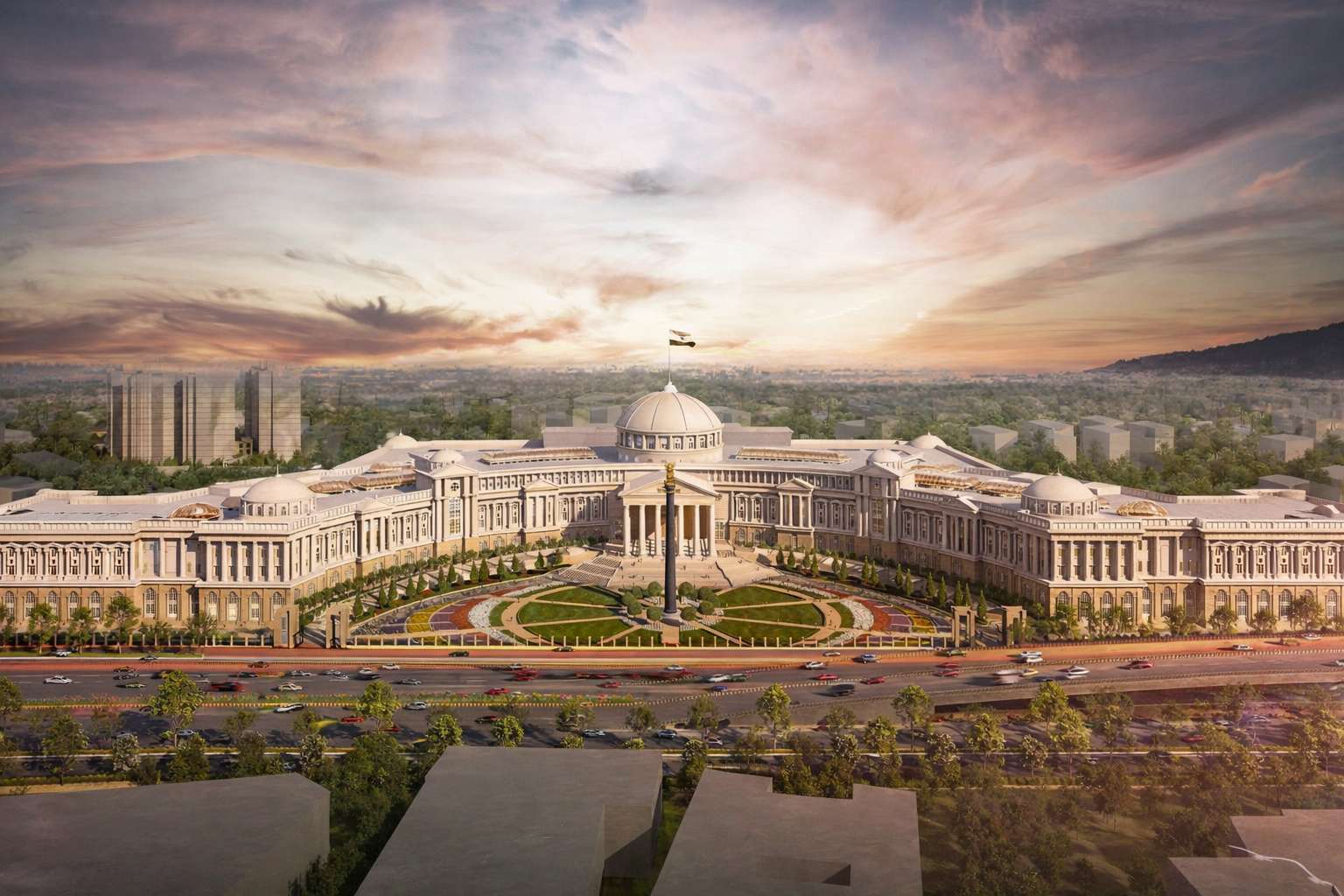
The upcoming Bombay High Court complex in Bandra East will not just help address the existing space crunch at the existing 146-year-old building in South Bombay’s Fort area but mark a major inflection point in the dynamics of the city’s residential real estate sector. Spread across 30 acres, the complex will comprise a built-up area of over 60 lakh sq. ft with residential high-rise towers proposed to be built for government employees in the vicinity of the court premises. But leading developers and urban planners in the city say that this move will have a ripple effect on the city’s overall real estate landscape.
Legacy retold
When the Bombay High Court opened in Fort in 1862, it created an entire ecosystem around it, with the Indian legal fraternity affecting the socio-cultural fabric of the region. Over the next 160 years, the area continued to be shaped by its most eminent residents – from chambers being named for the lawyers who built them to buildings being constructed to house the people who practise there. What followed thereafter firmly cemented the role of this district in shaping Mumbai’s character as the financial and commercial nerve centre of the country. The establishment of the court accelerated the development of the locality – first with the chambers, then firms, then the full ecosystem that serves them. And now, with the High Court moving, experienced developers such as Agami Realty believe that the dynamic will repeat and that the district will move with it.
The new legal lodestar
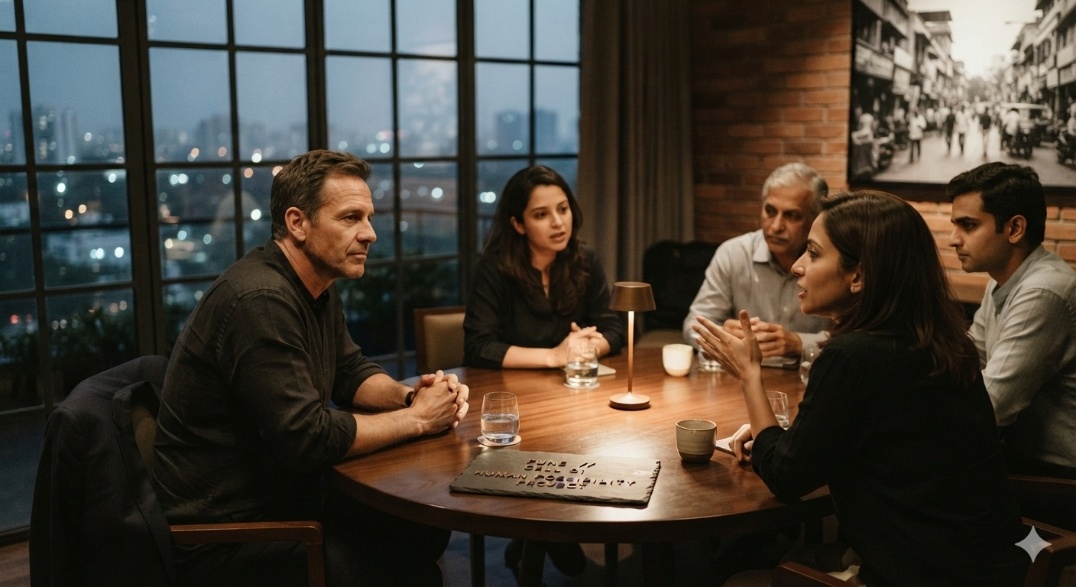
Located at Kalanagar in Bandra East, along a 450-metre stretch, the court will become a defining landmark in influencing the next chapter of Kalanagar’s growth story. The northward shift toward BKC and Bandra East is already ongoing. Prashant Khandelwal, Joint Secretary of CREDAI MCHI and Director & CEO of Agami Realty, elaborates, “We see prominent firms either opening second offices in the area or relocating permanently. BKC is already home to SEBI, NSE, NABARD, SIDBI, ICICI Bank, Citibank, and the US Consulate General, with more than 4 lakh people working in the area every day. With a full-scale institutional shift to Bandra East, we expect an elite transformation, driven by senior legal professionals and decision-makers. This will lead to the emergence of a high-value live-work ecosystem, where proximity to court and clients becomes a key driver of residential choice. Demand here is likely to be quality-led, favouring established and well-located micro-markets. The presence of legacy anchors such as the MIG Cricket Club further strengthens the area’s identity and long-term residential appeal.”
A systemic shift
While Kalanagar holds strong strategic importance given its position as the gateway to BKC and its immediate proximity to the upcoming legal district, the area’s growth is not an isolated phenomenon. When viewed from an urban planning perspective, Hardik Pandit, Director of APICES Studio, emphasises the importance of multi-nodal developments to create a distributed district as opposed to a single-location hub. “In this instance, the Bandra East–Sion–Wadala–Chembu corridor will be impacted by what is being called the ‘BKC Spillover Effect’. With space in BKC becoming limited and property prices skyrocketing, astute homebuyers and investors are seeking out neighbourhoods that offer excellent value, accessibility to the city’s Central Business Districts (CBDs) and long-term growth prospects. We are now witnessing the emergence of premium micro-markets that combine connectivity with liveability,” he says. He further highlights that this pattern of growth is endemic to Mumbai as a whole, with the city undergoing a major structural shift from a single-centric city to a polycentric metropolitan region based on growth corridors. In addition to creating a USD 300 billion economy by 2030 and a USD 1.5 trillion economy by 2047, this development strategy is also designed to ease pressure on the existing city and further decentralise existing and upcoming business hubs.
Spillover gains
The Bandra East–Sion–Wadala–Chembur corridor is emerging as a high-growth residential hub driven by superior connectivity (SCLR and the Eastern Freeway) and rapid redevelopment. Areas such as Chembur and Sion are witnessing rapid transformation with luxury projects and sophisticated developments including large-format townships and gated communities, which are transforming their skylines and urban fabric. “When a major legal anchor moves closer to Bandra East, residential demand doesn’t automatically move into the same pin code; it spreads to adjacent neighbourhoods that offer an enhanced quality of life. Chembur sits on the right side of this shift, with its established neighbourhood fabric and multiple mobility options including new metro connectivity linking key nodes such as BKC/Kurla/Chembur and the broader interconnect design of Metro Line 2B. For many working professionals, including those in the legal ecosystem, Chembur can become the ‘home base’ that balances commute certainty with a better value equation than the immediate Bandra East influence zone,” shares Parthh K Mehta, CMD, Paradigm Realty.
A new Mumbai emerges
Bandra East-focused developers such as Agami Realty are beginning to see early enquiries from professionals across the BKC corridor, including legal, consulting, and financial services, who view proximity to the upcoming court as a key consideration. As Khandelwal explains, “Bandra East is well positioned to transition into a high-demand, end-user-driven market, led by working professionals who see clear value in owning close to their place of work. This micro-market is likely to take on a more premium and low-density character.”
Paradigm Realty, on the other hand, is witnessing an uptick in buyers who are value-conscious but do not want to compromise on being connected to the city’s decision-making centres. Mehta points out the fact that Chembur’s demand story has consistently been tied to improved infrastructure-led connectivity and its comparatively more accessible entry pricing versus more upscale micro-markets – factors that sway the decision-making process for mid-segment homebuyers. He believes that should the new High Court complex in Bandra East progress as per its stated plan and timeline, it can add another layer of repeat, daily professional movement, making ‘connected residential hubs’ such as Chembur even more relevant.